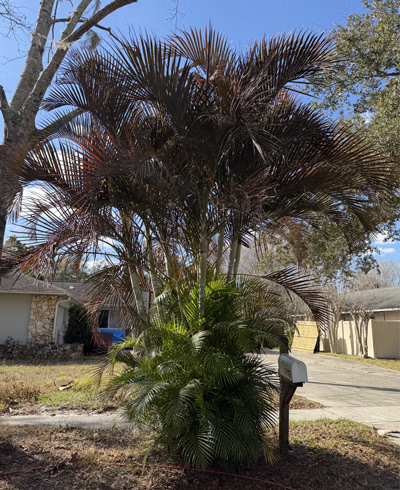
The two-day overnight winter freeze (February 1-2, 2026) caused temperatures to reach 25 degrees Fahrenheit in many areas two nights in a row. This left many Central Florida residents unsure if their palms would recover, how to determine which ones were dead, or what steps to take afterward. In some exposed areas lacking nearby trees to create a microclimate or in northern areas, an average temperature difference of just 3-5 degrees makes all the difference for tropical palms to survive.
The palms most impacted were Royal palms, Areca palms, Fishtail palms, Foxtail palms, Alexander palms and Christmas palms. We even had damage on Bismarck and Roebelinii palms.
Here are some of my observations as your Urban Tree Doctor and Palm expert. The Christmas palms, regardless of size have not exhibited any signs of recovery. Sad. We were hopeful since we saw foxtails and royal palms recover but we have been disappointed to see no growth so far. You can wait for the full six months in July and reevaluate at that time but so far they haven’t responded yet with any new growth. Alexander palms are not favored either to recover. Areca and fishtail palms are the next worst palms, but they can be cut down to the ground to regenerate new growth at the soil base if see new leaves emerge.
Roebellinii and Bismarck palms will come back as they are visibly alive but had several leaves within the crown brown/damaged.
The other Tropical PALMS Mentioned like foxtails and royals have a more favorable outcome if the palms are bigger in regard to height and width of trunk with age they favor more to survive. Basically the older palms are favoring better than the younger ones.
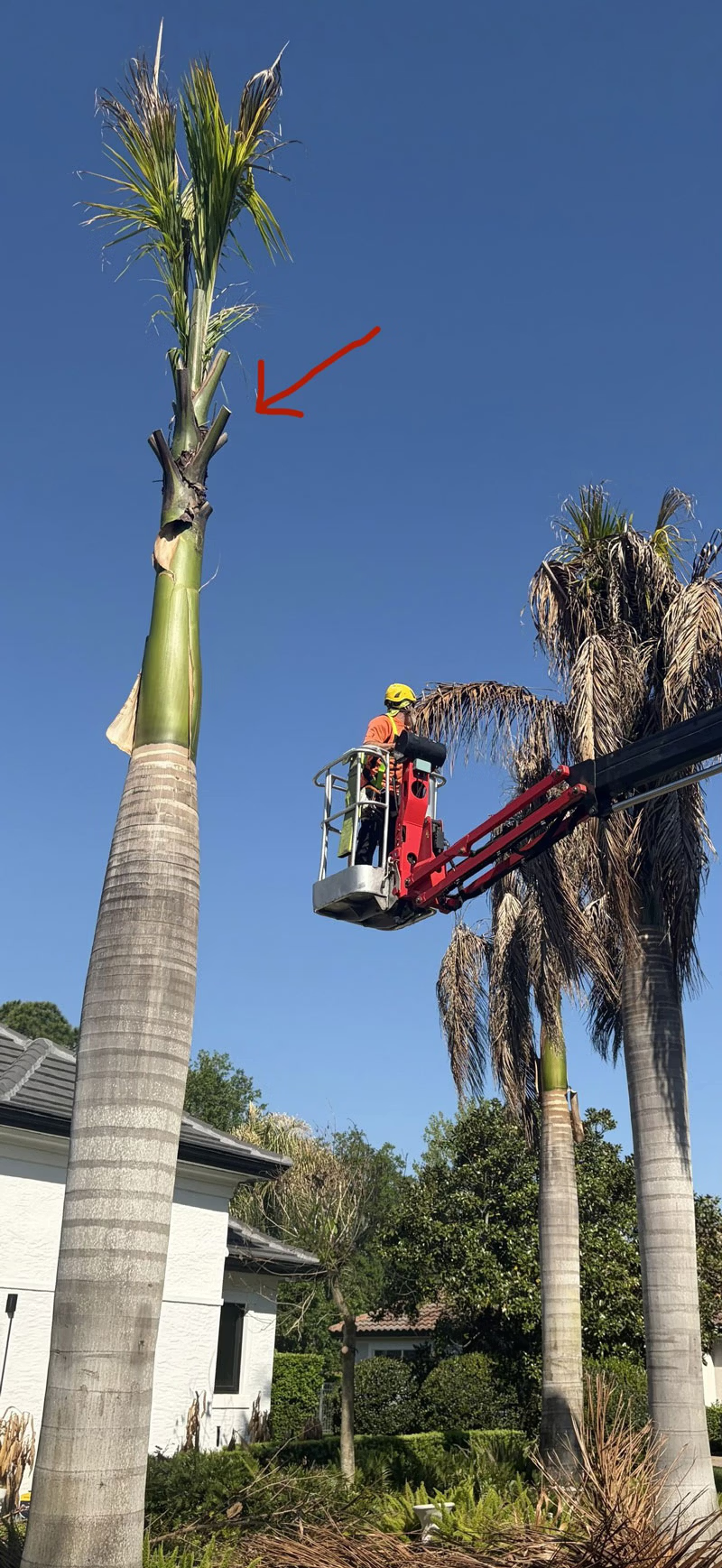
*We now recommend pruning off the brown leaves when you see new green growth or a new flush of green emerging in the center. Keep in mind the younger enclosed spear leaf that was not opened may be partially brown from cold damage, which can be tipped pruned off. At times this browning can affect the spear leaf to open and helpful to tip prune.
We are offering pruning quotes with our tree subcontractor to handle these detailed tasks as pruning is also DIFFERENT after cold damage by leaving the LEAF BASES LONGER (see picture at top) when we prune upward closer to the top of the crown. It is important to sterilize pruning tools after each palm pruned to not spread disease especially closer to the center of growth/crown.
Clients on our current palm program will receive for their first spring visit our additional growth enhancement hormone soil amendment treatment for increased cell division at the tips of areas of growth as a part our regular program. We are seeing great results from the cold damage recovery treatment we did for our clients who had the additional treatment with a jumpstart with our cold damage recovery program. We will continue to service all our tropical palms under our care for this treatment as spring is crucial time to develop new growth and encourage healthy new leaves.
After attending a 2 day Palm Quest conference in Ft. Lauderdale mid April by FNGLA, we understand from growers and UF researchers there will be some Boron and Manganese nutrient deficiencies in the new leaves that will emerge from the crown center directly from cold damage. Clients under our palm program this year for a tropical palm will receive additional treatments complimentary to help combat the next flush of growth and if caught early in timing of the flush of growth to correct it now.
Other news: We are conducting a study of different treatments for palm damage recovery after our two-day overnight freeze. We will share the results for the best cold damage care when promoting new growth. This study is important to discover when an event like cold damage happens to stay ahead of the curve as we apply treatments in the field and determine which products work the best and know what to do next time we experience freezing temperatures in tropical palms as your tree doctor.
We took 4 foxtails growing next to each other and applied four deferent treatments:
1. Granular slow release palm fertilizer only (control)
2. Granular fertilizer plus our new growth hormone enhancement product
3. Granular fertilizer, growth hormone plus liquid fertilizer soil drench
4. Granular fertilizer, growth hormone plus liquid fertilizer trunk injection
What about cold damage of Avocado, Mango, or Norfolk Pine trees? If you are not seeing green leaves anywhere on the trunk or coming from the base of trunk then it did not survive. Fruit trees recovering are showing on average mid points in the trunk with new leaves that look like emerging pimples to start. Most all recovering fruit trees at this 3 month marker after our freeze have some growth coming out. If not sure, please make an appointment with us to help determine this with you.
Norfolk pines we are suggesting to keep to give more time. Look for any green growth from the trunk or at the tops of the trees. If not, recommend removing especially closer to the home by July.
Thank you for entrusting us with your trees. We can’t control everything in nature but we do monitor and support your palms, trees, shrubs, (and now lawns) with the best top quality products at the right timing for good health to thrive.
Your Arborist and Horticulturist,
Jennifer
P.S. we are switching our April/May treatments of our traditional insecticide with a different product to be mindful for our honeybees when our palms produce flowers.